



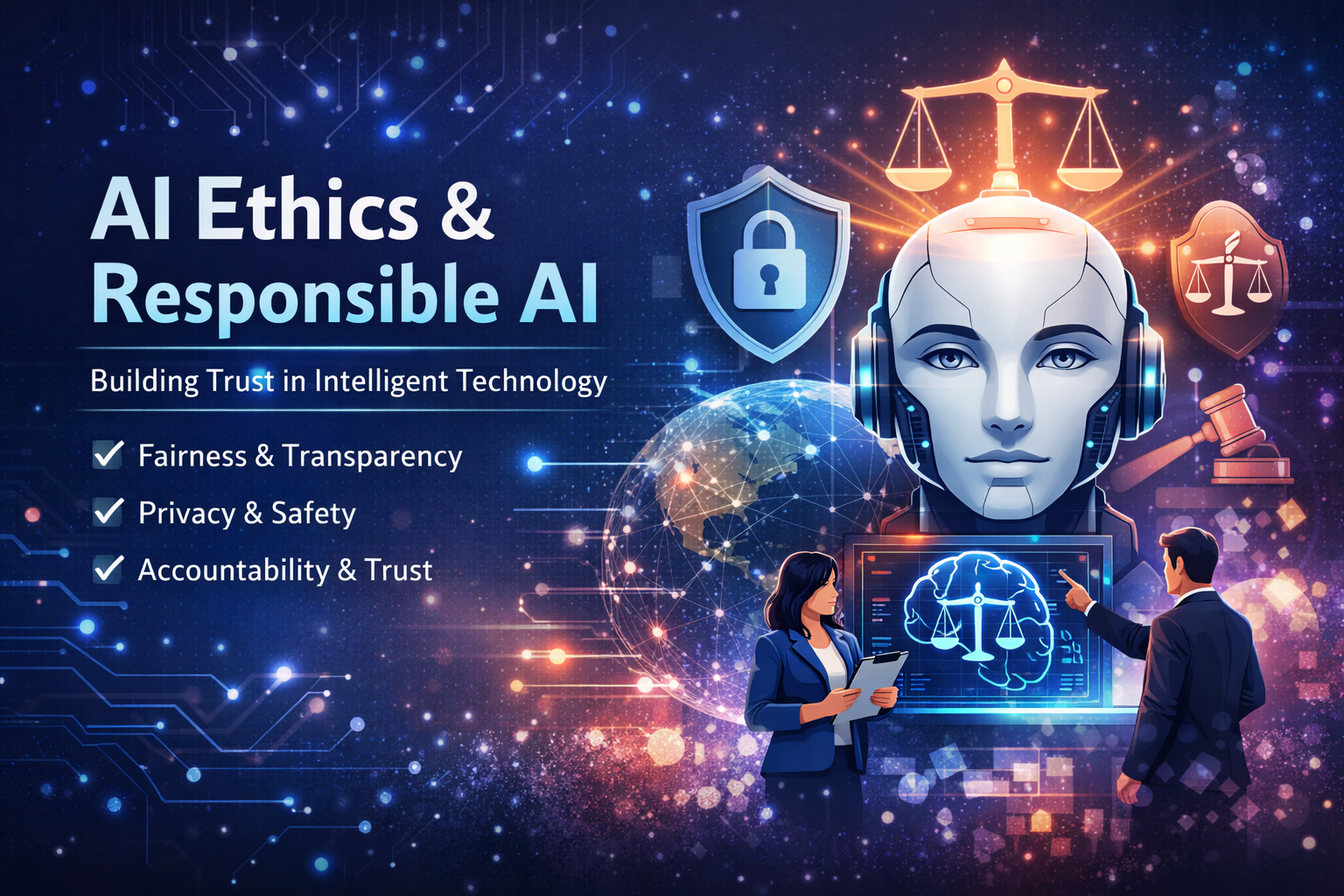
AI Ethics & Responsible AI: Building Trust in Intelligent Technology
Artificial Intelligence (AI) is transforming the way we live, work, and interact with technology. From personalized recommendations and voice assistants to automated decision-making in healthcare, finance, and recruitment, AI systems are becoming deeply embedded in everyday life. However, with this rapid growth comes a critical responsibility: ensuring that AI is developed and used ethically. This is where AI Ethics and Responsible AI play a vital role.
What Is AI Ethics?
AI ethics refers to the moral principles and guidelines that govern the design, development, deployment, and use of artificial intelligence systems. It focuses on ensuring that AI technologies benefit society while minimizing harm, bias, and misuse. Ethical AI aims to respect human rights, promote fairness, protect privacy, and ensure accountability in automated systems.
AI systems are not inherently ethical or unethical—they reflect the data, goals, and decisions programmed by humans. Therefore, ethical considerations must be embedded at every stage of the AI lifecycle.
Understanding Responsible AI
Responsible AI goes beyond theory and focuses on practical implementation. It involves building AI systems that are transparent, fair, secure, reliable, and accountable. Organizations adopting Responsible AI take ownership of how their AI systems impact individuals, communities, and society at large.
Responsible AI is not just a technical challenge; it is also a legal, social, and cultural responsibility. Businesses, developers, policymakers, and users all share the duty of ensuring AI is used wisely.
Why AI Ethics Matters
As AI systems increasingly influence critical decisions, ethical concerns become more significant. Poorly designed or unchecked AI can lead to serious consequences, including discrimination, loss of privacy, misinformation, and lack of accountability.
Some key reasons AI ethics is essential include:
-
Human impact: AI decisions can affect employment, healthcare access, credit approval, and legal outcomes.
-
Trust: Ethical AI builds user trust and acceptance.
-
Compliance: Governments worldwide are introducing AI regulations.
-
Reputation: Ethical failures can damage brand credibility and public confidence.
Key Principles of Ethical and Responsible AI
1. Fairness and Bias Mitigation
AI systems learn from data, and if that data contains bias, the AI may reinforce or amplify it. Ethical AI requires identifying and reducing biases related to gender, race, age, or socioeconomic status. Fairness ensures that AI outcomes do not discriminate against specific groups.
2. Transparency and Explainability
Many AI models, especially deep learning systems, operate as “black boxes.” Responsible AI promotes transparency by making AI decisions understandable to users and stakeholders. Explainable AI helps people understand why a system made a particular decision.
3. Privacy and Data Protection
AI relies heavily on data, much of which may be personal or sensitive. Ethical AI ensures data is collected lawfully, stored securely, and used responsibly. Compliance with data protection laws and respect for user consent are essential.
4. Accountability and Governance
Who is responsible when an AI system makes a mistake? Responsible AI frameworks clearly define accountability, ensuring that organizations and developers remain answerable for AI-driven decisions.
5. Safety and Reliability
AI systems must perform consistently and safely under real-world conditions. Ethical AI requires rigorous testing, monitoring, and risk assessment to prevent unintended harm.
6. Human Oversight
AI should support human decision-making, not replace it entirely in critical areas. Maintaining human control ensures ethical judgment, empathy, and responsibility remain central.
Ethical Challenges in AI
Despite best intentions, several challenges make ethical AI difficult to achieve:
-
Biased training data
-
Lack of global ethical standards
-
Complex and opaque algorithms
-
Rapid technological advancement
-
Profit-driven AI deployment without safeguards
Balancing innovation with ethical responsibility remains a major challenge for organizations and policymakers.
AI Ethics in Real-World Applications
Healthcare
AI can assist in diagnosis and treatment planning, but biased data can lead to misdiagnosis or unequal care. Ethical AI ensures fairness, accuracy, and patient privacy.
Finance
AI-driven credit scoring and fraud detection systems must be transparent and non-discriminatory. Responsible AI prevents unfair loan denials and financial exclusion.
Hiring and Recruitment
AI tools used for resume screening or interviews must avoid reinforcing workplace bias and ensure equal opportunity.
Social Media and Content Platforms
AI algorithms influence what users see online. Ethical AI helps combat misinformation, hate speech, and harmful content while respecting freedom of expression.
The Role of Regulations and Policies
Governments and international organizations are increasingly focusing on AI governance. Regulations aim to ensure safety, transparency, and accountability while encouraging innovation. Responsible AI practices help organizations stay compliant and future-ready.
However, regulation alone is not enough. Ethical AI requires a proactive commitment from businesses, developers, and technology leaders.
Building a Responsible AI Strategy
Organizations can adopt Responsible AI by:
-
Establishing clear ethical guidelines
-
Conducting regular bias and risk assessments
-
Using diverse and representative data
-
Ensuring cross-functional collaboration
-
Educating teams on AI ethics
-
Monitoring AI systems continuously
Ethical AI should be an ongoing process, not a one-time effort.
The Future of AI Ethics
As AI continues to evolve, ethical considerations will become even more critical. Emerging technologies like generative AI, autonomous systems, and AI agents raise new ethical questions about authorship, accountability, and control.
The future of AI depends on building systems that align with human values. Responsible AI will be a key differentiator for organizations seeking long-term success and trust.
Conclusion
AI Ethics and Responsible AI are not optional—they are essential for sustainable innovation. As AI becomes more powerful and widespread, ethical responsibility must guide its development and use. By prioritizing fairness, transparency, privacy, and accountability, we can ensure that AI serves humanity positively and responsibly.
Building ethical AI today lays the foundation for a trustworthy and inclusive technological future.