



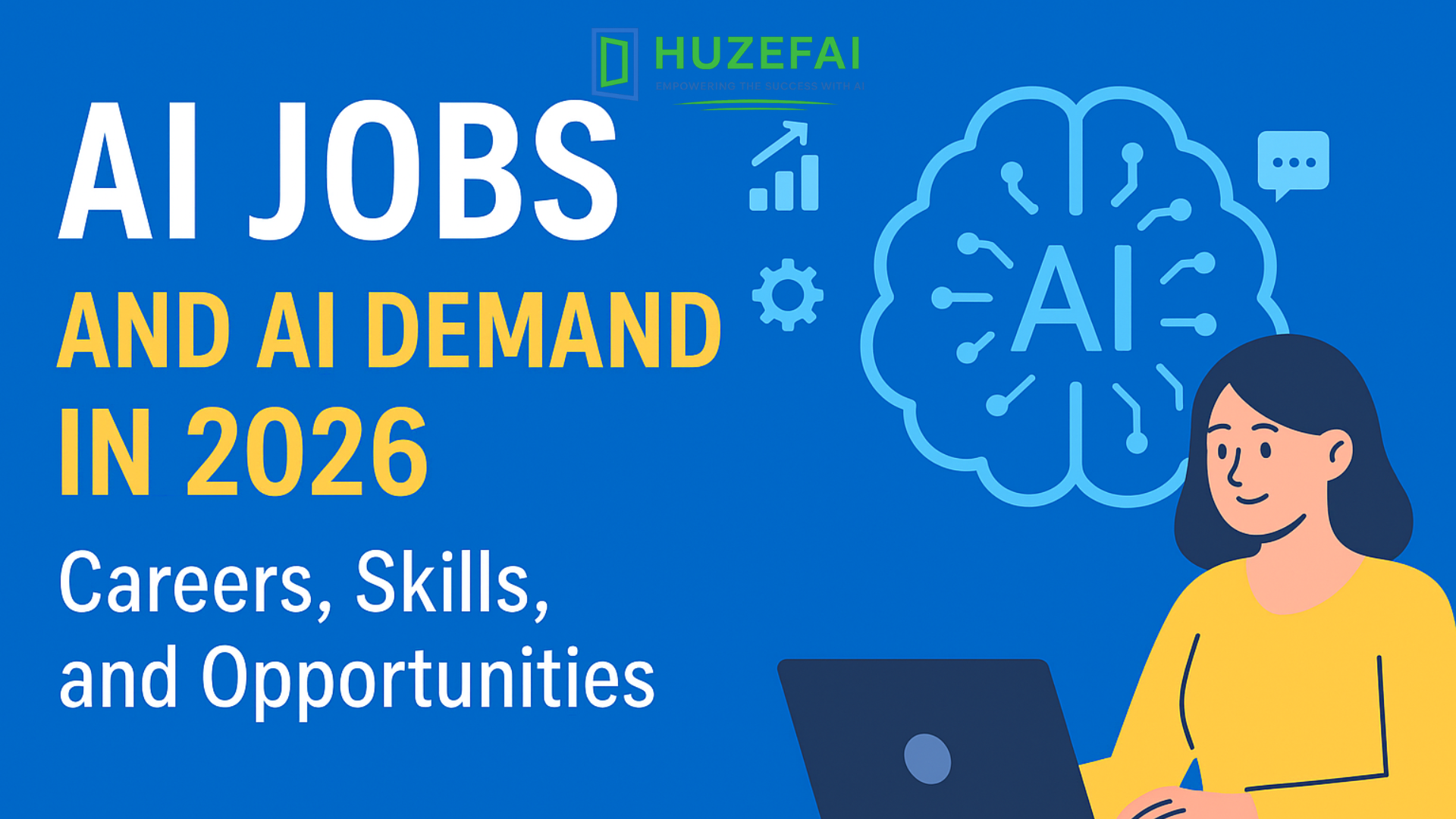
AI Jobs and AI Demand in 2026: Careers, Skills, and Opportunities
Artificial Intelligence (AI) is no longer an emerging technology—it is becoming the foundation of modern businesses. From smartphones and search engines to healthcare, finance, and education, AI is transforming how work is done. As we move closer to 2026, the demand for AI professionals is growing faster than ever, while job roles are evolving across industries.
This blog explores AI job demand in 2026, the most in-demand AI roles, how content and non-technical jobs are changing, and what skills are required to stay relevant in the AI-driven future.
The Growing Demand for AI in 2026
By 2026, AI adoption is expected to reach almost every industry. Organizations are investing heavily in automation, data-driven decision-making, and intelligent systems to stay competitive. This rapid adoption has created a strong demand for skilled professionals who can design, build, manage, and explain AI solutions.
According to industry forecasts, millions of new AI-related jobs will be created globally by 2026. In India alone, AI and data-related job openings are expected to cross one million roles, driven by IT services, startups, global capability centers, and digital transformation projects.
Unlike earlier technology waves, AI demand is not limited to software companies. Sectors such as healthcare, banking, manufacturing, retail, logistics, education, and media are actively hiring AI-skilled professionals.
Top AI Job Roles in Demand by 2026
AI careers in 2026 will not be limited to data scientists. The ecosystem is expanding, creating multiple specialized roles.
1. AI Engineer
AI Engineers design and deploy AI models into real-world applications. They work with machine learning frameworks, APIs, and cloud platforms to integrate AI into products.
Key Skills: Python, machine learning, deep learning, cloud AI services, APIs
Demand Level: Very High
2. Machine Learning Engineer
Machine Learning Engineers focus on building algorithms that learn from data. By 2026, ML engineers will be critical for personalization engines, recommendation systems, and predictive analytics.
Key Skills: Python, TensorFlow, PyTorch, statistics, data modeling
Demand Level: Very High
3. Data Scientist
Data scientists analyze large datasets to uncover patterns, trends, and business insights. While AI tools automate parts of this role, skilled data scientists remain in high demand.
Key Skills: Data analysis, statistics, Python/R, visualization, machine learning
Demand Level: High
4. NLP (Natural Language Processing) Specialist
With the rise of chatbots, voice assistants, and generative AI, NLP specialists are becoming increasingly important.
Key Skills: NLP, large language models, text analytics, deep learning
Demand Level: High
5. MLOps Engineer
MLOps professionals manage the deployment, monitoring, and scaling of AI models. As companies move AI models into production, this role will see massive growth.
Key Skills: DevOps, cloud platforms, CI/CD, model monitoring
Demand Level: High
6. AI Product Manager
AI Product Managers bridge the gap between business needs and AI development. They decide how AI is used to solve real problems.
Key Skills: Business strategy, AI fundamentals, communication, analytics
Demand Level: Growing rapidly
AI and the Future of Content & Non-Technical Jobs
One of the biggest questions people ask is: Will AI replace content writers, marketers, and non-technical jobs?
The answer is AI will transform these roles, not eliminate them completely.
Traditional Content Writing vs AI-Driven Content Roles
Basic content writing—such as generic blogs and repetitive articles—is increasingly automated using AI tools. However, new roles are emerging:
-
AI Content Specialist
-
Prompt Engineer
-
Technical Content Writer (AI & Tech niche)
-
Content Strategist with AI & SEO expertise
By 2026, content professionals who understand how to use AI tools effectively, add human creativity, and provide domain expertise will remain in demand.
AI Skills Required to Succeed in 2026
AI hiring in 2026 will be skill-based rather than degree-based. Employers will prioritize practical knowledge and project experience.
Technical Skills
-
Python programming
-
Machine learning and deep learning fundamentals
-
Data handling and visualization
-
Cloud AI platforms (AWS, Azure, Google Cloud)
-
Prompt engineering and generative AI tools
Non-Technical & Hybrid Skills
-
Critical thinking and problem-solving
-
Communication and storytelling
-
AI ethics and responsible AI awareness
-
Business understanding
-
SEO, analytics, and content strategy (for content roles)
Industries Driving AI Job Growth
AI demand in 2026 will be strong across multiple sectors:
-
Healthcare: Diagnosis, medical imaging, personalized treatment
-
Finance: Fraud detection, algorithmic trading, risk analysis
-
Retail & E-commerce: Recommendations, demand forecasting
-
Manufacturing: Predictive maintenance, robotics
-
Education: Personalized learning, AI tutors
-
Media & Marketing: Content automation, audience analytics
This cross-industry adoption ensures long-term job stability for AI-skilled professionals.
How Freshers and Professionals Can Prepare for AI Careers
Whether you are a student, working professional, or content creator, preparation is key.
For Freshers
-
Learn AI basics and Python
-
Build small projects
-
Focus on problem-solving, not just tools
-
Create a GitHub or portfolio
For Working Professionals
-
Upskill with AI certifications
-
Learn AI tools relevant to your field
-
Combine AI knowledge with domain expertise
For Content Creators
-
Learn AI tools and prompt engineering
-
Write AI-focused blogs and case studies
-
Develop SEO and analytics skills
-
Position yourself as an AI thought leader
The Future Outlook: AI Jobs in 2026 and Beyond
AI will not replace humans—it will augment human capabilities. The biggest winners in 2026 will be those who adapt, learn continuously, and combine AI with creativity and strategy.
AI jobs will offer:
-
High salary potential
-
Global opportunities
-
Career flexibility across industries
-
Long-term relevance
Those who resist AI may struggle, but those who embrace it will thrive.
Conclusion
AI demand in 2026 will be stronger than ever, reshaping the global job market. From highly technical roles like AI engineers and data scientists to hybrid roles like AI content specialists and product managers, opportunities are expanding rapidly.
The future belongs to professionals who learn AI, work with AI, and think beyond automation. Whether you aim to build AI systems or explain them through content, now is the time to prepare for an AI-powered career.