



DevOps in 2026: Tools, Skills, and Career Opportunities
In today’s fast-paced digital world, organizations must
deliver software quickly, reliably, and at scale. Traditional software
development models are no longer enough to meet modern business demands. This
is where DevOps plays a critical role. In 2026, DevOps is not just a
trend it is a core foundation of modern IT and cloud-based systems.
What is DevOps?
DevOps is a combination of development (Dev) and operations
(Ops) that focuses on collaboration, automation, and continuous
improvement. It breaks down the barriers between development teams who write
code and operations teams who manage infrastructure. By working together
throughout the software lifecycle, teams can deliver applications faster, with
fewer errors and better stability.
DevOps encourages a culture of shared responsibility, where
developers and operations engineers jointly own application performance,
security, and reliability.
Why DevOps Matters More Than Ever
With businesses adopting cloud computing, microservices, and
containerized applications, the need for DevOps has grown significantly.
Customers expect applications to be available 24/7, load quickly, and update
seamlessly without downtime.
DevOps helps organizations:
- Release
software faster and more frequently
- Reduce
deployment failures and downtime
- Improve
system scalability and performance
- Enhance
collaboration across teams
- Respond
quickly to customer feedback
In 2026, companies using DevOps practices are more
competitive, agile, and resilient than those relying on traditional IT
processes.
Core DevOps Practices
DevOps is built around several key practices that ensure
smooth software delivery:
Continuous Integration (CI)
Developers frequently merge code changes into a shared
repository. Automated tests verify the code to detect issues early.
Continuous Deployment (CD)
Once code passes testing, it is automatically deployed to
production or staging environments, ensuring faster and safer releases.
Infrastructure as Code (IaC)
Infrastructure is managed using code instead of manual
configurations. Tools like Terraform and ARM templates allow teams to create,
update, and scale infrastructure consistently.
Monitoring and Feedback
Applications and infrastructure are continuously monitored
to identify issues, improve performance, and enhance user experience.
Essential DevOps Tools in 2026
A strong DevOps engineer must be comfortable with
industry-standard tools:
- Version
Control: Git, GitHub, GitLab
- CI/CD:
Jenkins, Azure DevOps, GitHub Actions
- Containers:
Docker
- Orchestration:
Kubernetes
- Automation:
Ansible, Terraform
- Cloud
Platforms: Microsoft Azure, AWS, Google Cloud
- Monitoring:
Prometheus, Grafana, ELK Stack
While no one needs to master all tools at once,
understanding how they work together is essential.
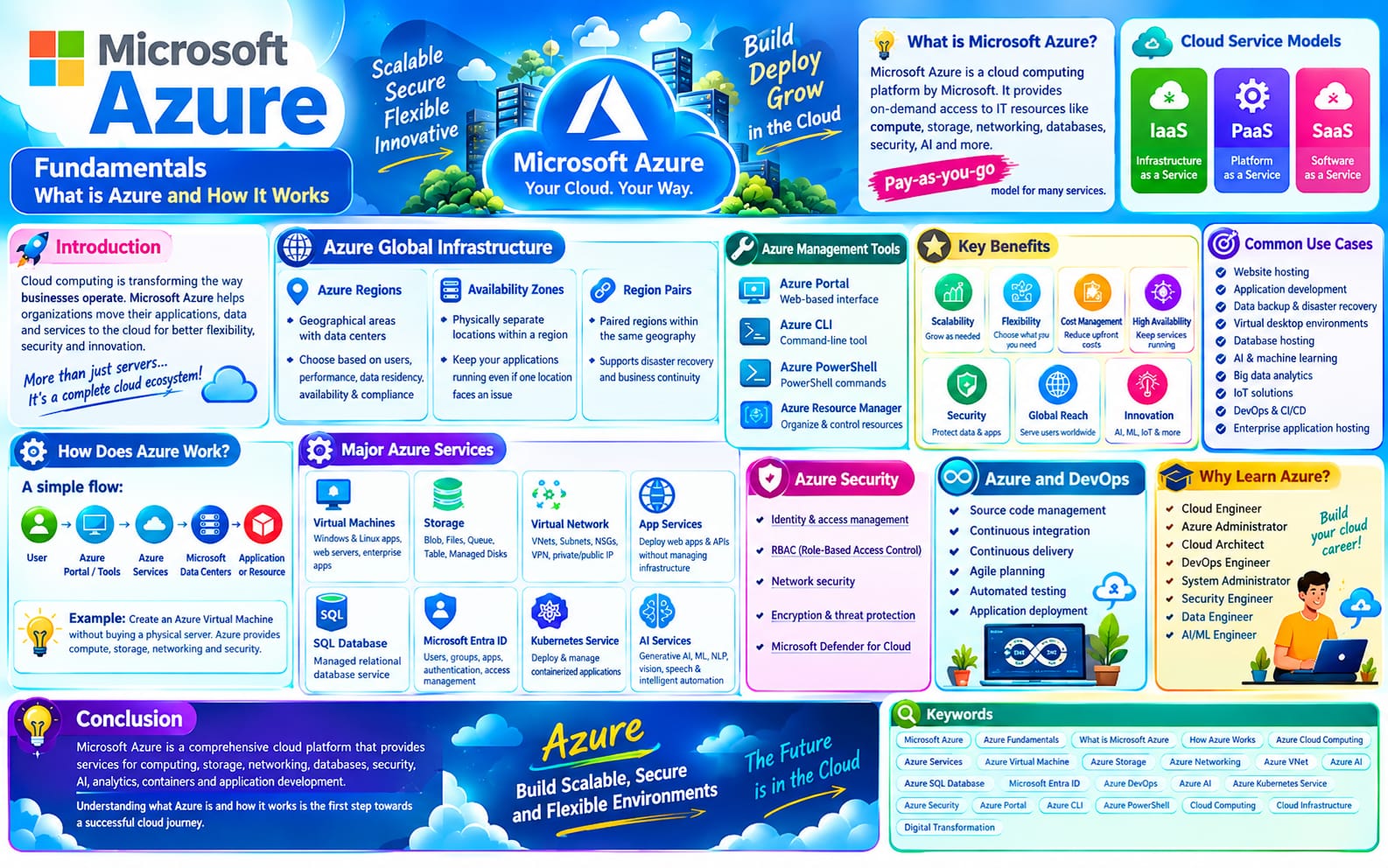
Cloud and DevOps
Cloud computing and DevOps go hand in hand. Platforms like Microsoft
Azure provide integrated DevOps services such as Azure DevOps Pipelines,
Repos, and Boards. These services enable organizations to build, test, deploy,
and monitor applications efficiently.
Cloud-based DevOps allows teams to:
- Scale
infrastructure on demand
- Reduce
operational costs
- Improve
application reliability
- Automate
security and compliance
As cloud adoption continues to grow, DevOps skills remain in
high demand.
DevOps Career Opportunities
DevOps offers excellent career growth and job stability.
Common roles include:
- DevOps
Engineer
- Cloud
Engineer
- Site
Reliability Engineer (SRE)
- Platform
Engineer
- CI/CD
Engineer
In 2026, DevOps professionals are among the highest-paid
IT roles, especially those with cloud and automation expertise. Companies
value DevOps engineers because they directly impact business efficiency and
customer satisfaction.
Skills Required to Start a DevOps Career
To become a successful DevOps professional, focus on:
- Linux
fundamentals and system administration
- Networking
basics
- Scripting
with Shell or Python
- Cloud
services and architectures
- CI/CD
pipeline design
- Automation
and monitoring
Hands-on practice, real-world projects, and continuous
learning are more important than certifications alone.
Conclusion
DevOps has transformed how software is built, deployed, and
maintained. In 2026, it continues to drive innovation, speed, and reliability
across industries. Whether you are a student, developer, or IT professional,
learning DevOps can open doors to exciting career opportunities.
By mastering DevOps tools, cloud platforms, and automation
practices, you can future-proof your career and become a valuable asset to any
organization.
Now is the perfect time to start your DevOps journey.