



Prompt Engineering
✅ Introduction
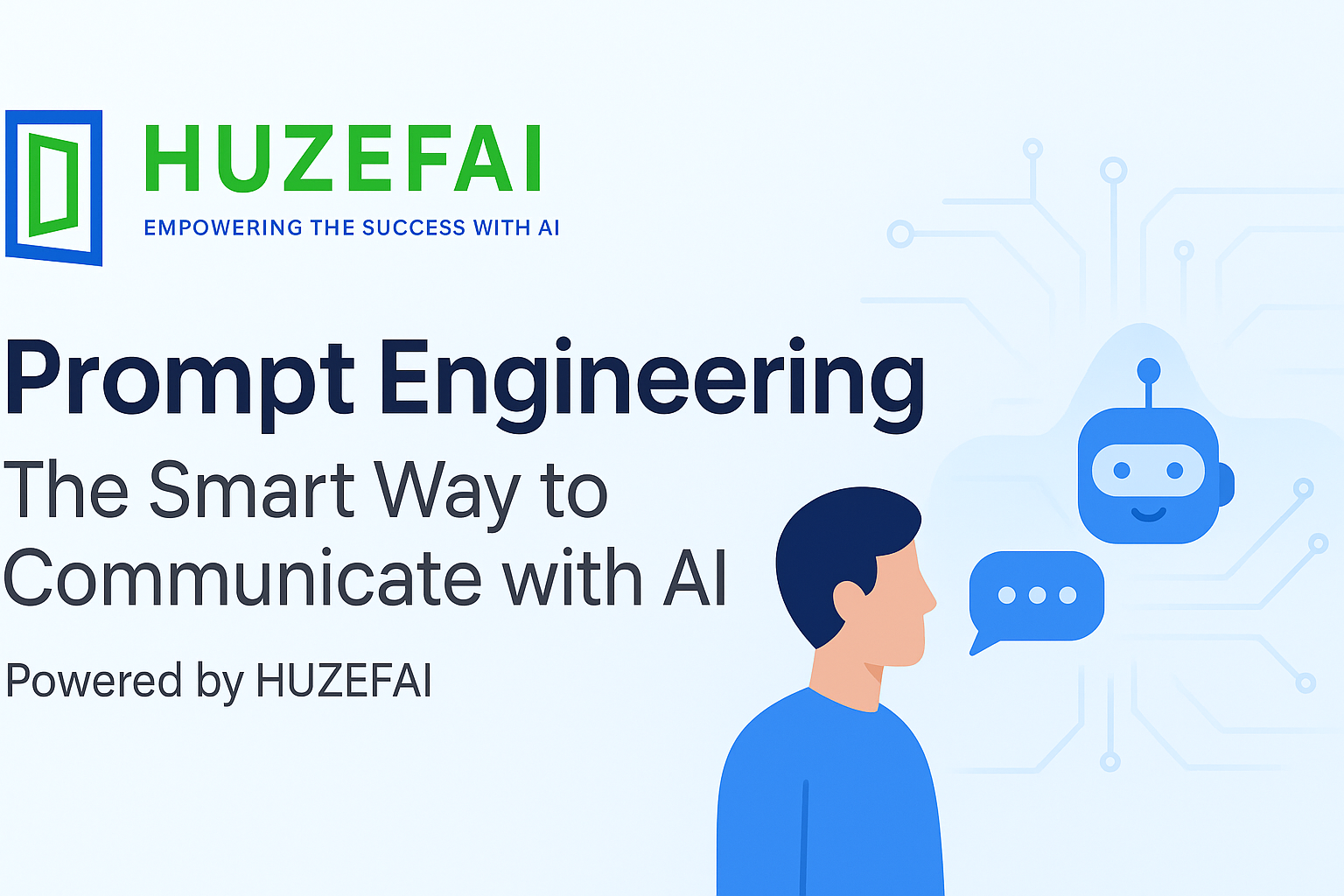
Prompt Engineering is the process of writing clear and correct instructions (prompts) to communicate with Artificial Intelligence (AI) systems. Prompts guide the AI on what task to perform and how the response should be given. Since AI systems work only based on input prompts, the quality of the output depends completely on how the prompt is written. Even a small change in words can change the final answer. Therefore, Prompt Engineering is an important skill for students in today’s digital learning environment.
AI systems do not think or understand like humans. They analyze patterns from large datasets and predict suitable responses. If the prompt is unclear, the response may be confusing or incorrect. Prompt Engineering provides direction to the AI by defining its role, task, and response type. This helps students receive clearer and more accurate information for learning and academic work.
Prompt Engineering improves learning efficiency and accuracy. It helps students avoid repeated errors and saves time. With properly written prompts, students can summarize lessons, understand difficult concepts, and solve problems step by step. It also allows students with no technical background to use AI tools confidently. Because of this, Prompt Engineering has become a core digital skill in education.
A good prompt includes five important elements:
- Role
– Who the AI should act as (teacher, expert, tutor)
- Task
– What action the AI must perform
- Context
– Background information to reduce confusion
- Format
– Structure of the output (points, steps, paragraphs)
- Tone
– Style of explanation (simple or detailed)
Including these elements improves output quality
significantly.
Students can use different types of prompts depending on their learning needs.
- Instruction
prompts give direct commands
- Role-based
prompts assign expert roles to AI
- Context-based
prompts include background details
- Example-based
prompts guide with samples
- Step-by-step
prompts explain processes clearly
Using the correct prompt type leads to better learning
results.
Effective techniques include breaking large questions into smaller parts, using simple language, and setting clear limits like word count. Improving prompts after reviewing AI responses helps achieve better accuracy. Regular practice builds confidence and skill in using AI for study purposes.
Prompt Engineering helps students interact with AI in a smart and responsible way. It teaches how to ask the right questions and receive correct answers. As AI becomes common in education, mastering Prompt Engineering will help students study better, save time, and succeed academically. It is a key skill for the future of learning.