



Artificial Intelligence (AI) is no longer a futuristic concept—it is a present-day reality transforming businesses, governments, and everyday life. Among the leading platforms driving this transformation is Microsoft Azure AI. As we look ahead, Azure AI is positioned to play a critical role in shaping the future of intelligent applications, automation, and responsible innovation. This blog explores the future of Azure AI, its key trends, upcoming capabilities, and how it will impact industries worldwide.
Understanding Azure AI Today
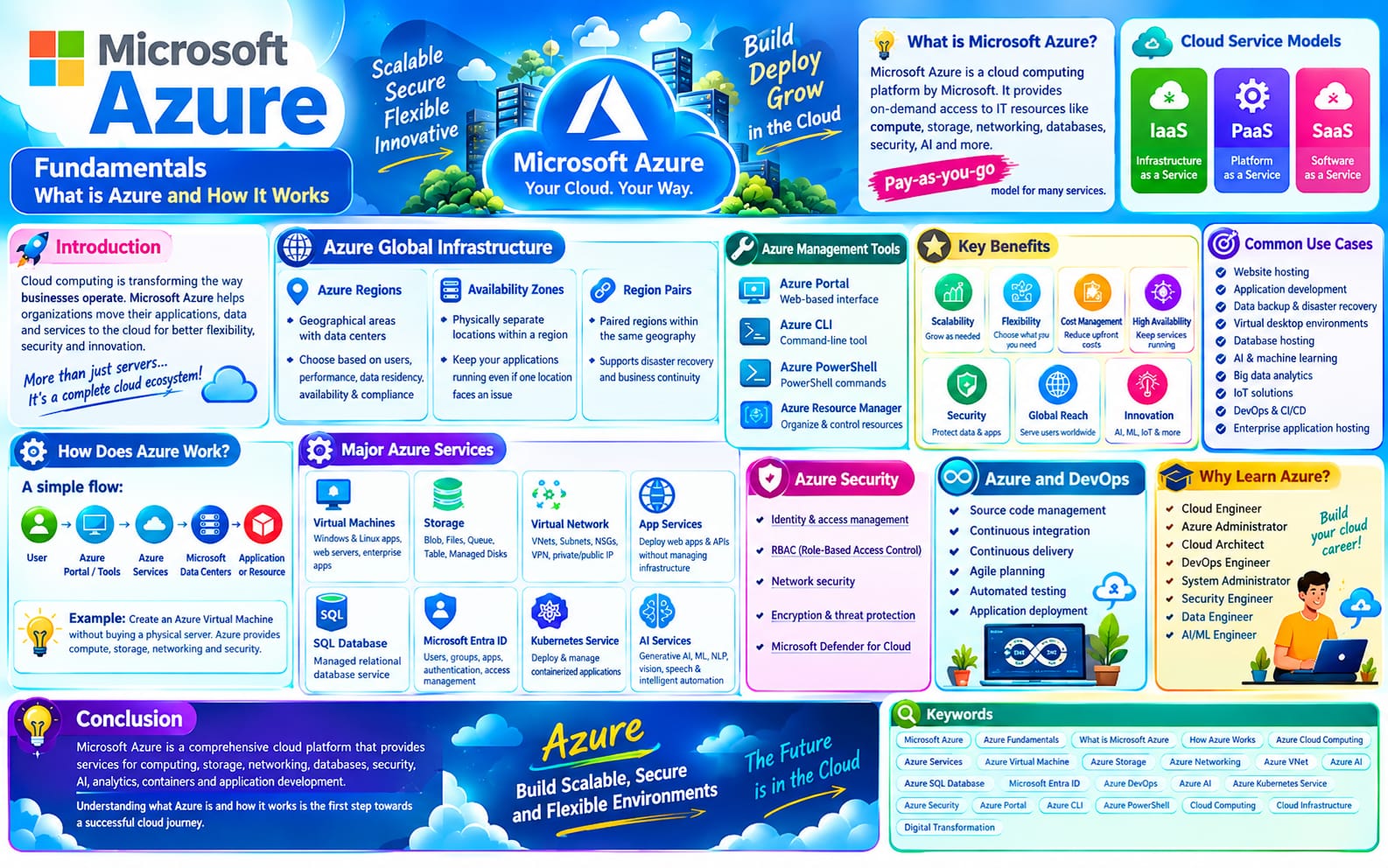
Azure AI is a comprehensive set of AI services, tools, and frameworks offered by Microsoft through the Azure cloud platform. It enables developers and organizations to build, deploy, and manage AI-powered solutions without needing deep expertise in data science.
Azure AI currently includes:
Machine Learning services
Cognitive Services (Vision, Speech, Language, Decision)
Generative AI models via Azure OpenAI Service
AI-powered analytics and automation tools
These capabilities form the foundation for the future evolution of Azure AI.
The Future Vision of Azure AI
Microsoft’s long-term vision for Azure AI focuses on human-centered, secure, and scalable AI. The future will not just be about smarter machines, but about AI that works responsibly alongside humans.
Key future goals include:
Democratizing AI for all skill levels
Embedding AI into every business process
Ensuring ethical, transparent, and compliant AI usage
Scaling AI globally with cloud and edge computing
1. Generative AI Will Lead Innovation
One of the most transformative aspects of Azure AI’s future is Generative AI. With Azure OpenAI Service, organizations can access advanced language and image models securely within the Azure ecosystem.
Future advancements in Generative AI on Azure:
More domain-specific AI models for healthcare, finance, and education
Enhanced multimodal AI (text, image, audio, and video combined
Deeper integration with enterprise tools like Microsoft 365 and Dynamics
AI assistants such as Microsoft Copilot will become more intelligent, proactive, and context-aware—helping users write code, analyze data, create content, and make decisions faster.
2. Responsible and Ethical AI by Design
As AI adoption increases, so do concerns around bias, privacy, and misuse. Microsoft has strongly committed to Responsible AI, and Azure AI will continue to lead in this area.
Future-focused Responsible AI initiatives include:
Built-in bias detection and mitigation tools
Explainable AI models for transparency
Strong governance, auditing, and compliance frameworks
Alignment with global AI regulations
Azure AI will help organizations deploy AI that is not only powerful but also trustworthy and compliant.
3. AI for Every Industry
The future of Azure AI lies in industry-specific solutions rather than generic AI tools.
Industry transformations powered by Azure AI:
Healthcare: AI-assisted diagnostics, personalized treatment plans, and medical image analysis
Finance: Fraud detection, risk modeling, and intelligent customer support
Retail: Demand forecasting, personalized shopping experiences, and inventory optimization
Manufacturing: Predictive maintenance, quality control, and smart factories
Education: Adaptive learning platforms and AI-powered tutoring
Azure AI will increasingly offer pre-built industry models that reduce development time and improve accuracy.
4. Seamless Integration with Cloud and Edge
In the future, Azure AI will operate seamlessly across cloud, edge, and hybrid environments. This means AI will not be limited to data centers—it will run closer to where data is generated.
Benefits of this approach:
Real-time decision-making at the edge
Reduced latency for critical applications
Enhanced data privacy and security
Better performance for IoT and smart devices
Azure’s hybrid capabilities will make it easier for organizations to deploy AI anywhere, from factories to smart cities.
5. Low-Code and No-Code AI Development
Another major future trend is the rise of low-code and no-code AI tools. Azure AI will continue simplifying AI development so that non-technical users can also build intelligent solutions.
Expected improvements:
Visual AI model builders
Automated machine learning (AutoML) enhancements
Drag-and-drop AI workflows
Faster experimentation and deployment
This democratization of AI will empower business users, analysts, and students to innovate without writing complex code.
6. AI-Powered Security and Cyber Defense
With cyber threats becoming more sophisticated, Azure AI will play a vital role in intelligent security.
Future security capabilities include:
AI-driven threat detection and response
Behavioral analytics for anomaly detection
Automated incident resolution
Continuous security posture management
AI will help organizations stay ahead of attackers by predicting and preventing threats before damage occurs.
7. Smarter Data + AI Convergence
Data is the fuel for AI. In the future, Azure AI will be deeply integrated with data platforms, enabling smarter analytics and insights.
Key developments:
Real-time AI analytics on big data
Natural language querying of datasets
AI-driven data preparation and cleansing
Unified data and AI pipelines
This convergence will allow businesses to move from data-driven to AI-driven decision-making.
Career and Business Opportunities with Azure AI
As Azure AI evolves, demand for skilled professionals will continue to rise.
Future career roles include:
Azure AI Engineer
Machine Learning Engineer
AI Solution Architect
Data Scientist
Responsible AI Specialist
For businesses, early adoption of Azure AI will lead to:
Faster innovation cycles
Improved customer experiences
Reduced operational costs
Competitive advantage in global markets
Conclusion: Azure AI as the Future AI Backbone
The future of Azure AI is powerful, ethical, and inclusive. By combining cutting-edge AI models, enterprise-grade security, responsible AI principles, and seamless cloud integration, Microsoft Azure is building an AI ecosystem ready for the next decade.
Organizations that invest in Azure AI today will be better prepared for tomorrow’s challenges—unlocking smarter automation, deeper insights, and transformative innovation.
Azure AI is not just shaping the future of technology—it is shaping the future of how humans and machines work together.