





Artificial Intelligence (AI) is no longer a futuristic
concept. It is already transforming industries such as healthcare, finance,
retail, manufacturing, and education. However, developing and running AI
systems requires massive computing power, large datasets, and scalable
infrastructure. This is where cloud computing becomes essential.
Today, major cloud providers like Amazon Web Services, Microsoft
Azure, and Google Cloud Platform are enabling organizations to build and deploy
AI solutions faster and more efficiently than ever before.
The combination of AI and cloud computing has created
a powerful ecosystem where businesses can develop intelligent applications,
automate complex processes, and gain valuable insights from data. In this blog,
we will explore how cloud platforms support AI, the key services offered by
AWS, Azure, and GCP, and why cloud-based AI is shaping the future of
technology.
What Is Cloud-Based AI?
Cloud-based AI refers to artificial intelligence systems
that are developed, trained, and deployed using cloud computing platforms.
Instead of running AI models on local machines or on-premise servers,
organizations use cloud infrastructure to process data and perform machine
learning tasks.
Cloud providers offer ready-to-use tools, machine learning
frameworks, and powerful computing resources that simplify the entire AI
development lifecycle.
With cloud-based AI, companies can:
- Train
machine learning models using powerful GPUs
- Store
and process large volumes of data
- Deploy
AI applications globally
- Scale
resources based on demand
- Integrate
AI features into existing applications
This approach significantly reduces the complexity and cost
of building AI solutions.
Why AI Needs Cloud Computing
Artificial intelligence systems require three essential
components: data, computing power, and development tools. Managing these
components on traditional infrastructure can be expensive and difficult to
scale.
Cloud computing provides several advantages that make it
ideal for AI development.
1. Massive Data Storage
AI models rely on large datasets for training and analysis.
Cloud platforms offer scalable storage services that can store terabytes or
even petabytes of data.
These storage systems are designed for reliability,
security, and global access.
2. High-Performance Computing
Training deep learning models requires powerful GPUs and
specialized hardware. Cloud platforms provide high-performance computing
resources that can be accessed on demand.
Instead of purchasing expensive hardware, developers can
rent computing power only when needed.
3. Built-In AI Tools
Cloud providers offer pre-built AI services that make
development easier. These services include tools for computer vision, natural
language processing, speech recognition, and predictive analytics.
This allows developers to focus on building applications
rather than managing infrastructure.
AI Services in AWS
Amazon Web Services is one of the most widely used cloud
platforms for artificial intelligence and machine learning. AWS provides a
comprehensive ecosystem of services designed to support the entire AI workflow.
Amazon SageMaker
Amazon SageMaker is AWS’s primary machine learning platform.
It enables developers to build, train, and deploy machine learning models
quickly.
Key features include:
- Automated
model training
- Scalable
infrastructure for large datasets
- Model
deployment as APIs
- Built-in
monitoring tools
SageMaker supports popular machine learning frameworks such
as TensorFlow, PyTorch, and Scikit-learn.
Amazon Rekognition
Amazon Rekognition is a powerful computer vision service
that analyzes images and videos.
Capabilities include:
- Face
detection
- Object
recognition
- Emotion
analysis
- Image
classification
Businesses use this service for security monitoring,
identity verification, and content moderation.
Amazon Lex
Amazon Lex enables developers to build conversational AI
applications such as chatbots and virtual assistants. It powers many customer
service bots used in websites and mobile applications.
Amazon Polly
Amazon Polly converts text into natural-sounding speech. It
is commonly used in accessibility applications, voice assistants, and automated
customer service systems.
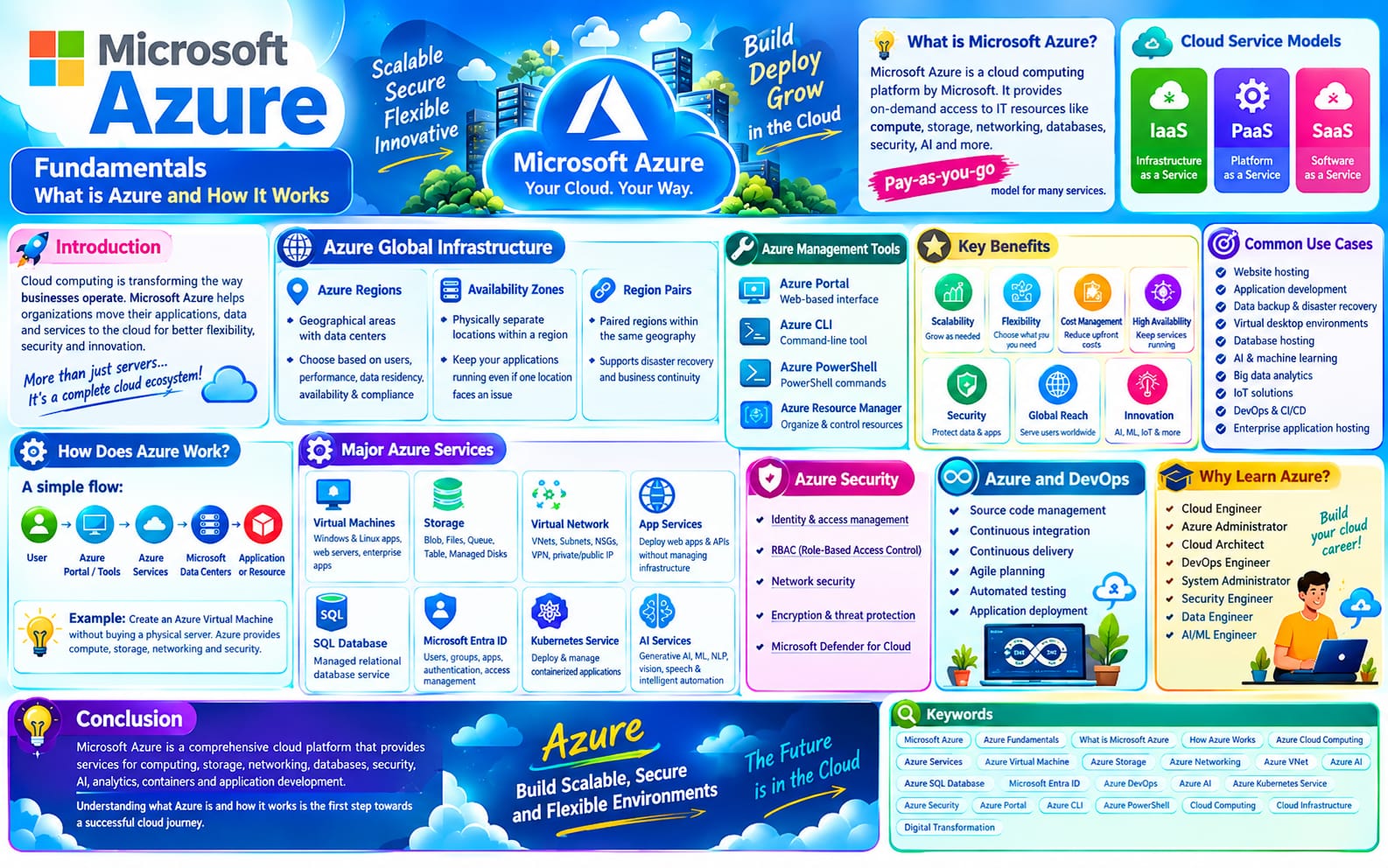
AI Services in Azure
Microsoft Azure has established itself as a leading cloud
platform for enterprise AI solutions. Azure provides powerful tools that help
organizations integrate intelligence into their applications and business
processes.
Azure Machine Learning
Azure Machine Learning is a cloud-based platform for
building and managing machine learning models. It supports the entire machine
learning lifecycle, from data preparation to deployment.
Key capabilities include:
- Automated
machine learning
- Model
training and deployment
- MLOps
integration
- Experiment
tracking and monitoring
Azure Machine Learning helps organizations manage
large-scale AI projects efficiently.
Azure Cognitive Services
Azure Cognitive Services provide pre-built APIs that enable
applications to understand speech, language, images, and decision-making
patterns.
Developers can use these services to add advanced AI
capabilities without building complex models.
Examples include:
- Image
recognition
- Speech-to-text
conversion
- Language
translation
- Sentiment
analysis
Azure OpenAI
Azure also offers generative AI capabilities through its
integration with advanced language models. Organizations can build AI
assistants, generate content, automate workflows, and develop intelligent
copilots using this service.
AI Services in Google Cloud
Google Cloud Platform is widely recognized for its
leadership in artificial intelligence and machine learning research. Google
Cloud provides advanced tools for building data-driven AI applications.
Vertex AI
Vertex AI is Google Cloud’s unified machine learning
platform. It combines data engineering, model training, and deployment tools
into a single environment.
Developers can build AI models, train them using large
datasets, and deploy them as scalable APIs.
Vertex AI also supports AutoML, which allows users to create
machine learning models with minimal coding.
Vision AI
Vision AI enables applications to analyze images and videos
using machine learning algorithms.
Capabilities include:
- Object
detection
- Image
classification
- Text
extraction from images
- Facial
recognition
These features are widely used in retail, security systems,
and document processing.
Natural Language AI
Natural Language AI helps applications understand and
analyze human language.
It supports features such as:
- Sentiment
analysis
- Entity
recognition
- Content
classification
Companies use this service to analyze customer feedback,
social media posts, and product reviews.
Benefits of AI and Cloud Integration
The integration of AI with cloud platforms offers several
benefits for organizations.
Scalability
Cloud infrastructure allows AI applications to scale
automatically. If an application suddenly receives millions of requests, the
cloud can allocate additional resources instantly.
Cost Efficiency
Cloud-based AI eliminates the need for expensive hardware
investments. Companies only pay for the resources they use.
Faster Development
Cloud providers offer ready-made AI services and development
tools. This accelerates the development process and reduces time to market.
Global Deployment
Cloud platforms operate data centers around the world,
enabling organizations to deploy AI applications globally.
Real-World Applications of Cloud AI
Cloud-based AI is already transforming multiple industries.
Healthcare
AI systems analyze medical images, predict diseases, and
support doctors in diagnosis.
Finance
Banks use AI models to detect fraud, analyze financial
transactions, and assess risk.
Retail
Retail companies use AI to recommend products, personalize
marketing campaigns, and analyze customer behavior.
Manufacturing
Manufacturing companies use AI-powered predictive
maintenance to monitor machines and prevent failures.
Education
Educational platforms use AI to create personalized learning experiences and intelligent tutoring systems.
Future Trends in AI and Cloud Computing
The future of AI and cloud computing is full of exciting
possibilities.
Several emerging trends are shaping the next generation of
intelligent applications.
Generative AI
Generative AI models are capable of creating text, images,
videos, and software code. Cloud platforms are rapidly integrating these
capabilities into their services.
Autonomous AI Agents
AI agents that can perform tasks independently are becoming
more common. These systems can automate workflows, analyze data, and make
decisions without human intervention.
Multi-Cloud AI Architectures
Many organizations are adopting multi-cloud strategies that
combine services from multiple providers to improve reliability and
flexibility.
AI-Powered DevOps
Artificial intelligence is also being used to automate
software development, testing, and deployment processes.
Conclusion
Cloud computing and artificial intelligence are two of the
most important technologies shaping the modern digital world. Platforms such as
Amazon Web Services, Microsoft Azure, and Google Cloud Platform provide the
infrastructure, tools, and services needed to build powerful AI applications.
By integrating AI with cloud platforms, organizations can
unlock new opportunities for innovation, automation, and data-driven
decision-making. As these technologies continue to evolve, their combination
will drive the next wave of digital transformation across industries.
Businesses that adopt cloud-based AI today will be better
positioned to compete in the technology-driven future.