





Introduction
In today’s digital world, businesses no longer depend only on physical servers and local data centers. Cloud computing has changed how companies build, deploy, and scale applications. Among the top cloud platforms in the world, Microsoft Azure stands out as a powerful, flexible, and enterprise-ready cloud solution.
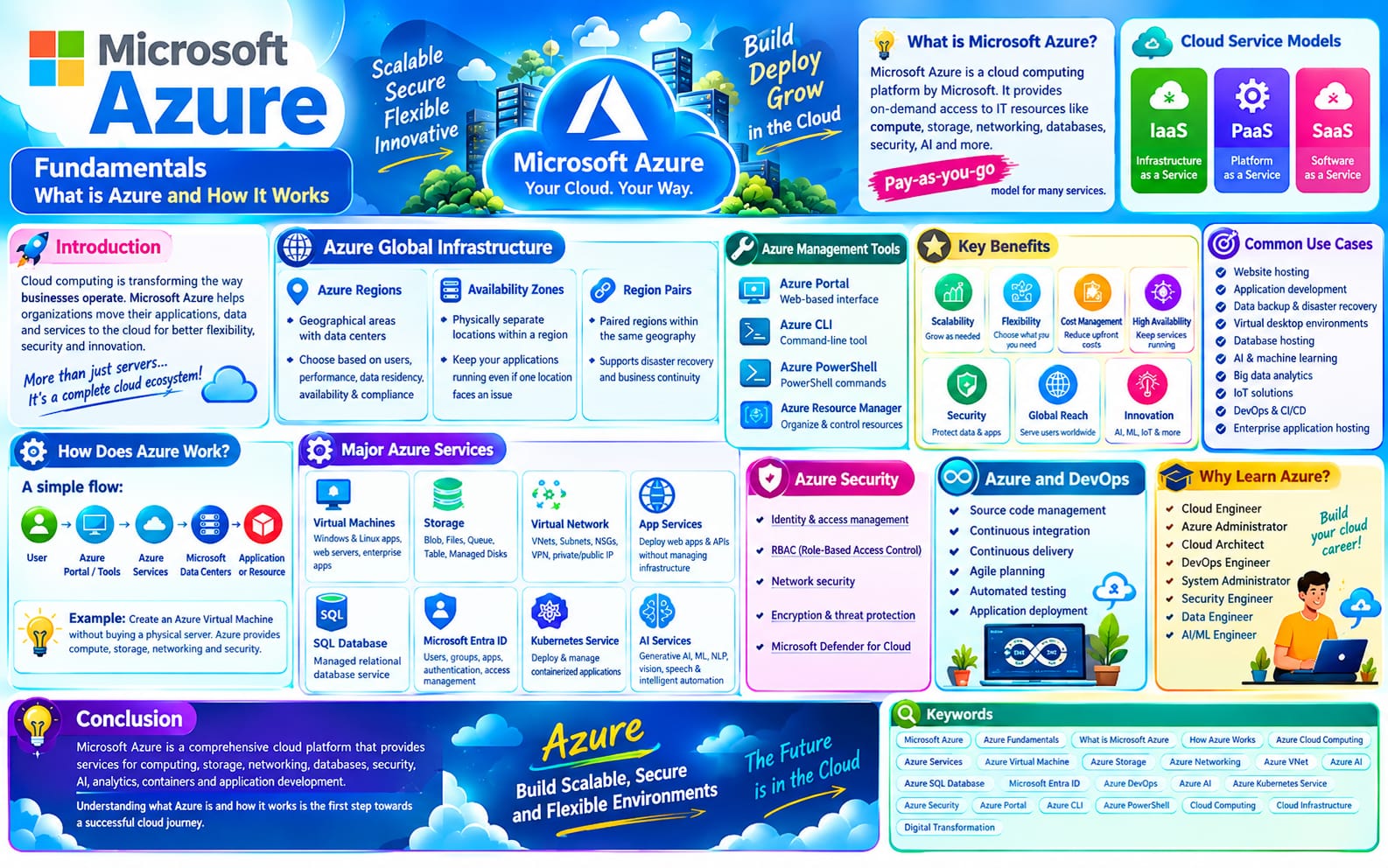
Microsoft Azure, commonly known as Azure Cloud, provides a wide range of services such as computing power, storage, databases, networking, artificial intelligence, and security — all delivered over the internet. Whether you are a student, developer, startup founder, or enterprise leader, Azure plays a major role in modern IT infrastructure.
This blog explains what Azure Cloud is, how it works, its services, benefits, use cases, and future scope in a simple and practical way.
What is Microsoft Azure?
Microsoft Azure is a cloud computing platform developed by Microsoft that allows users to build, deploy, and manage applications through Microsoft-managed data centers worldwide.
Azure offers:
-
Infrastructure as a Service (IaaS)
-
Platform as a Service (PaaS)
-
Software as a Service (SaaS)
Instead of buying expensive servers and hardware, organizations can use Azure resources on a pay-as-you-go basis.
How Azure Cloud Works
Azure works on a global network of data centers located in multiple regions across the world. Users can access Azure services through:
-
Azure Portal (web interface)
-
Command-line tools (Azure CLI, PowerShell)
-
APIs and SDKs
Azure manages the physical infrastructure, while users control applications, data, and configurations. This model reduces cost, improves scalability, and increases reliability.
Key Azure Cloud Services
1. Azure Compute Services
These services provide computing power to run applications:
-
Azure Virtual Machines (VMs) – Run Windows or Linux servers
-
Azure App Service – Host web apps and APIs
-
Azure Functions – Serverless computing for event-based tasks
-
Azure Kubernetes Service (AKS) – Manage containerized applications
2. Azure Storage Services
Azure offers highly secure and scalable storage:
-
Blob Storage – Store unstructured data like images and videos
-
File Storage – Cloud-based file shares
-
Queue Storage – Messaging between services
-
Disk Storage – Storage for virtual machines
3. Azure Database Services
Azure supports both SQL and NoSQL databases:
-
Azure SQL Database
-
Azure Cosmos DB
-
Azure Database for MySQL / PostgreSQL
-
SQL Managed Instance
These databases are fully managed, meaning Azure handles backups, updates, and scaling.
4. Networking Services
Azure provides strong networking capabilities:
-
Virtual Network (VNet)
-
Load Balancer
-
Application Gateway
-
Azure VPN Gateway
-
Azure ExpressRoute
These services ensure secure and fast communication between resources.
5. Security and Identity
Security is one of Azure’s strongest areas:
-
Azure Active Directory (Azure AD)
-
Multi-Factor Authentication (MFA)
-
Azure Defender
-
Role-Based Access Control (RBAC)
Azure follows strict compliance standards like ISO, GDPR, HIPAA, and SOC.
6. AI, Machine Learning & Analytics
Azure supports advanced technologies:
-
Azure Machine Learning
-
Cognitive Services
-
Azure Synapse Analytics
-
Azure Data Factory
These tools help businesses analyze data and build intelligent applications.
Benefits of Azure Cloud
1. Scalability
Azure allows you to scale resources up or down based on demand. This is ideal for growing businesses.
2. Cost Efficiency
Pay only for what you use. No need for heavy upfront hardware investments.
3. High Availability
Azure offers built-in redundancy and disaster recovery options.
4. Global Reach
With data centers across the world, Azure ensures low latency and high performance.
5. Strong Security
Microsoft invests billions in cybersecurity, making Azure one of the most secure cloud platforms.
6. Hybrid Cloud Support
Azure works well with on-premise systems, making it perfect for hybrid cloud environments.
Common Use Cases of Azure
-
Hosting websites and mobile apps
-
Data backup and disaster recovery
-
DevOps and CI/CD pipelines
-
AI and machine learning projects
-
Enterprise application migration
-
IoT solutions
-
E-commerce platforms
-
Big data analytics
Azure vs Other Cloud Platforms
While AWS and Google Cloud are strong competitors, Azure has unique advantages:
-
Deep integration with Microsoft products
-
Strong enterprise adoption
-
Best support for Windows, .NET, and Active Directory
-
Excellent hybrid cloud solutions
Career Opportunities in Azure Cloud
Azure skills are in high demand worldwide. Popular job roles include:
-
Azure Cloud Engineer
-
Azure Administrator
-
DevOps Engineer
-
Cloud Architect
-
Security Engineer
-
Data Engineer
Certifications like AZ-900, AZ-104, AZ-204, and AZ-305 help professionals advance their careers.
Future of Azure Cloud
The future of Azure is extremely promising. Microsoft continues to invest heavily in:
-
Artificial Intelligence
-
Cloud security
-
Sustainability
-
Industry-specific cloud solutions
As more companies move to digital platforms, Azure will remain a key player in cloud innovation.
Conclusion
Microsoft Azure Cloud is a powerful, secure, and flexible cloud platform suitable for businesses of all sizes. From hosting simple websites to managing complex enterprise systems, Azure provides everything needed to succeed in the digital era.
Learning Azure is not just a technical skill — it is a future-ready career investment. Whether you are starting your cloud journey or expanding your IT expertise, Azure is a platform worth mastering.